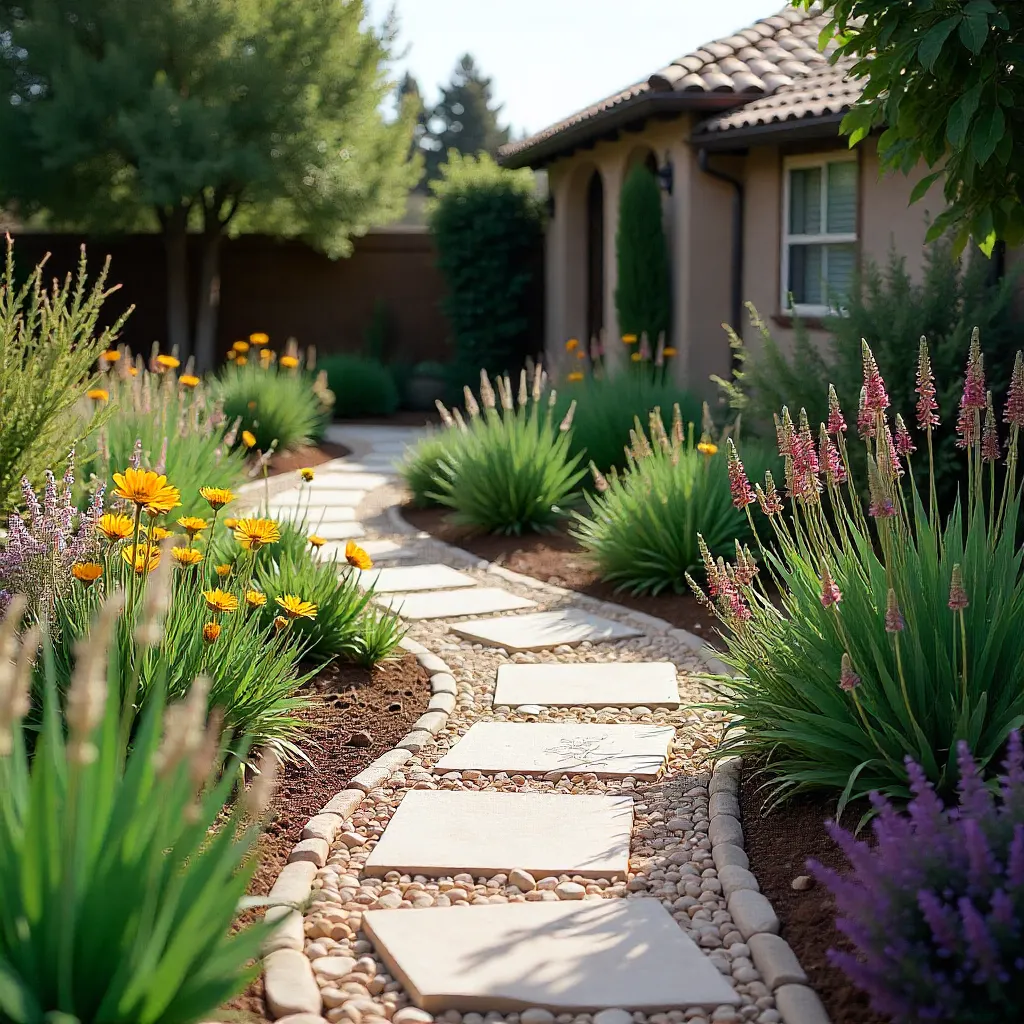
Resource Conservation Calculator
Projected Water Savings Over 10 Years
Design Methodology
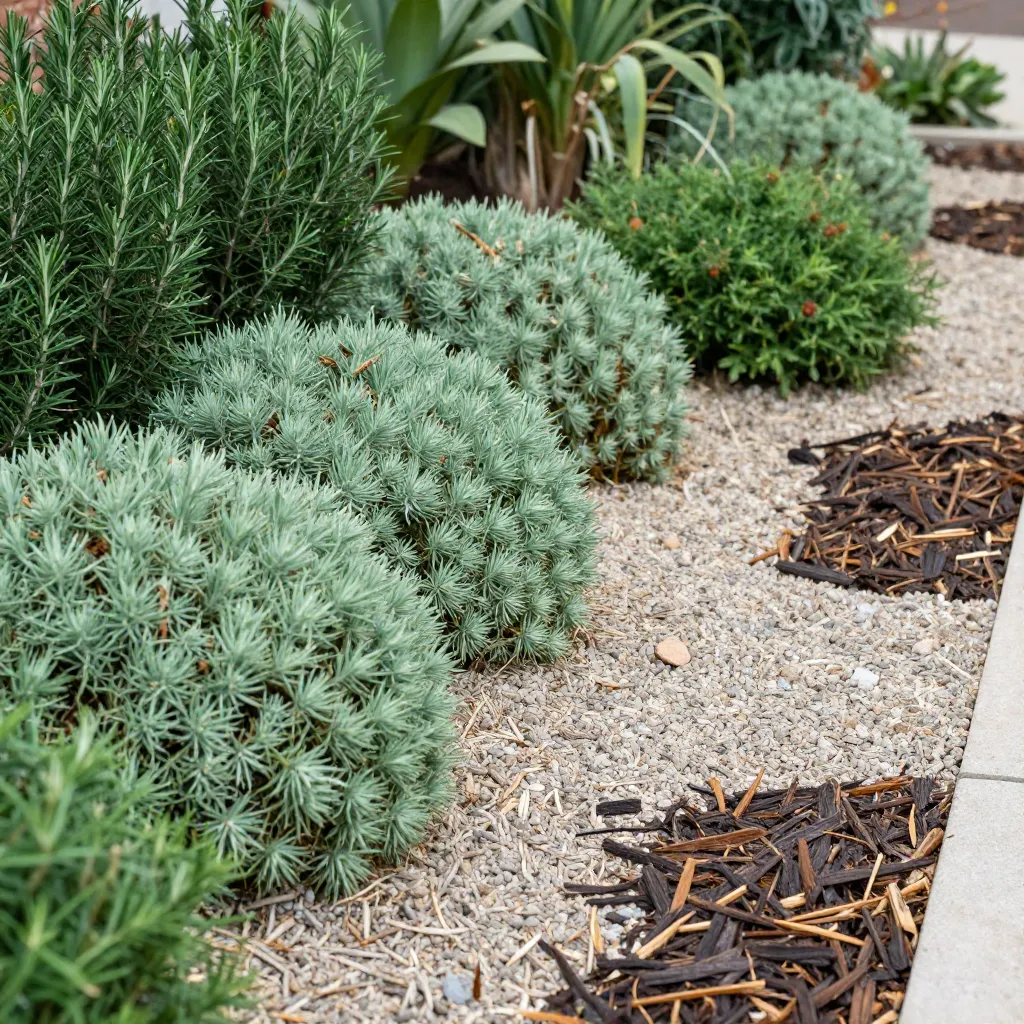
Minimal Water Requirements
Our designs prioritize plant species that have adapted to low-water environments. These selections reduce irrigation needs while maintaining visual appeal throughout the seasons.
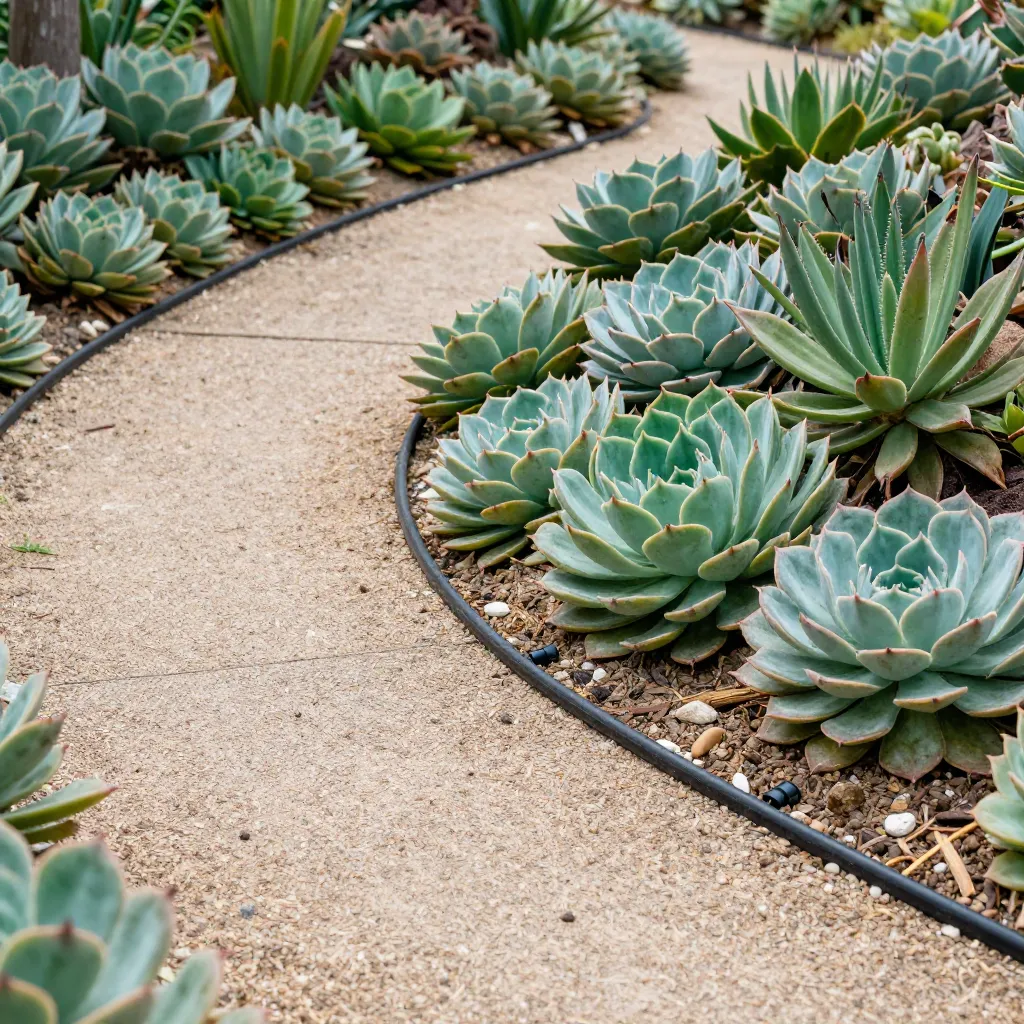
Strategic Material Selection
We utilize gravel, stone, and permeable materials that support drainage and reduce heat absorption. This approach creates microclimates favorable for selected vegetation.
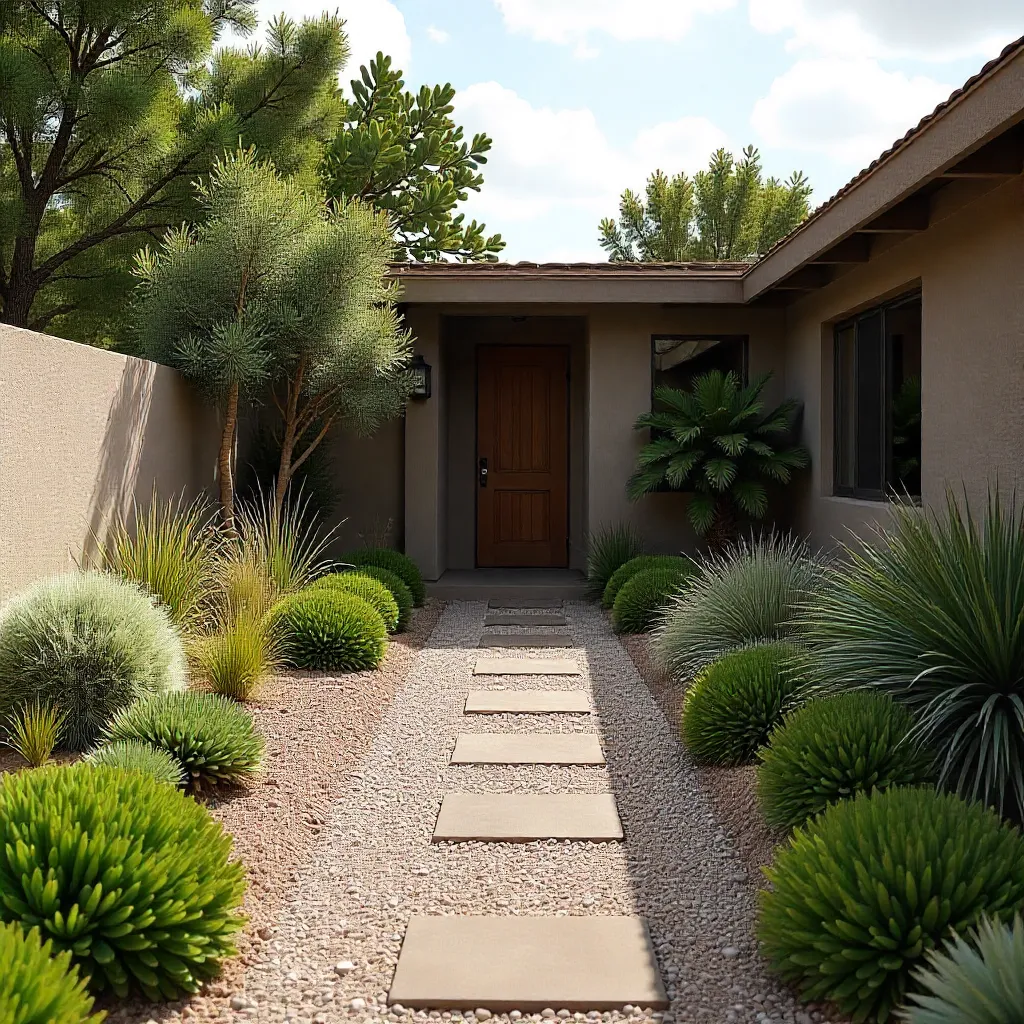
Climate Adaptation
Each design considers local climate patterns, soil composition, and sun exposure. This analysis ensures long-term sustainability and reduced maintenance requirements.
Layered Drainage Systems
Our installation process involves creating multiple drainage layers beneath the surface. These layers manage water distribution efficiently, preventing waterlogging while maximizing available moisture for plant roots.
The system includes a base layer of larger stones, followed by progressively finer materials, topped with a weed barrier membrane. This structure supports healthy root development while minimizing maintenance.
Resilient Plant Database
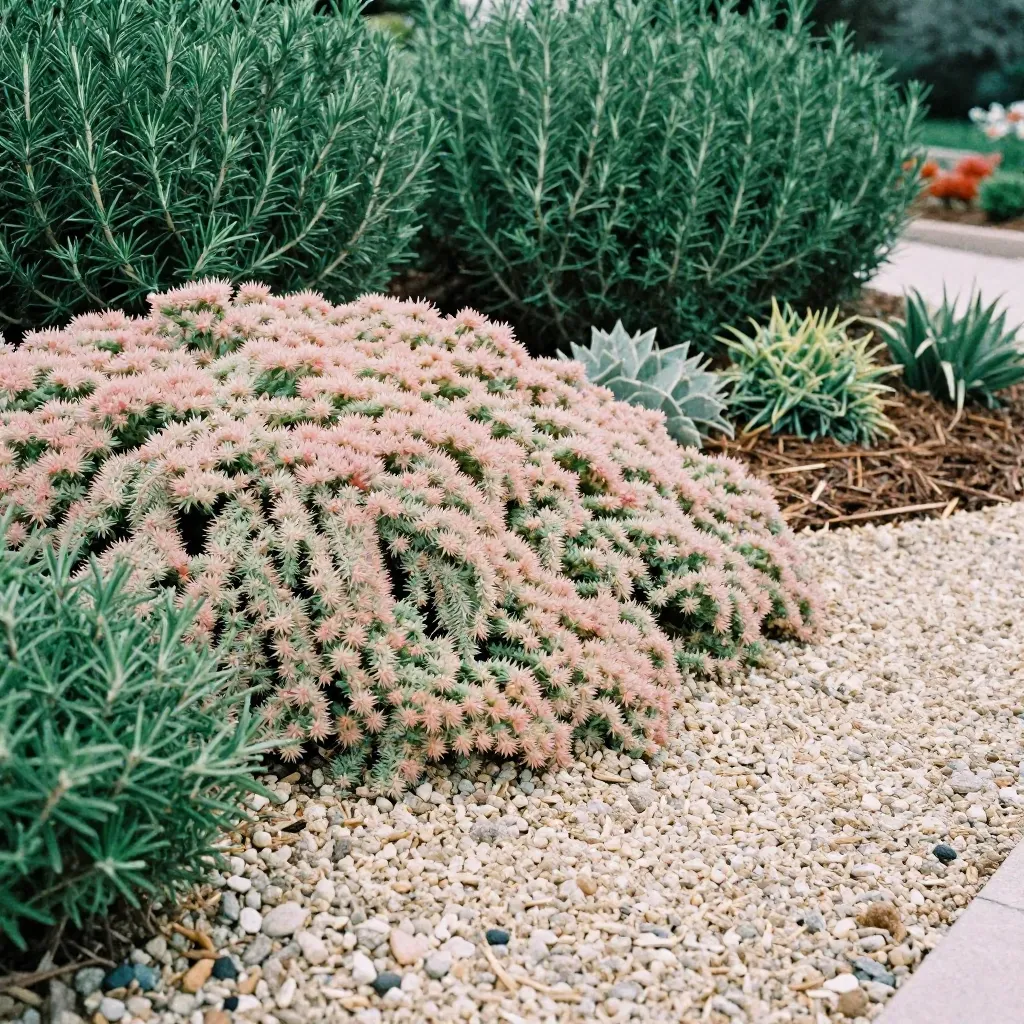
We maintain an extensive catalog of plants evaluated for their ability to thrive in low-water conditions. Each species is documented with thermal tolerance data and survival characteristics.
Native Adaptations
Plants that have naturally evolved to handle dry conditions often require minimal intervention once established. These selections form the foundation of sustainable designs.
Performance Metrics
Our database includes detailed information about each plant's water needs, growth patterns, and environmental preferences. This data guides selection for specific project requirements.
Visual Documentation
Each species entry includes visual references and growth expectations. This helps clients understand how their garden will develop over time.
Project Development Process
Site Assessment
We begin with a comprehensive evaluation of your space, including soil analysis, sun patterns, and existing conditions. This assessment informs all design decisions.
Design Development
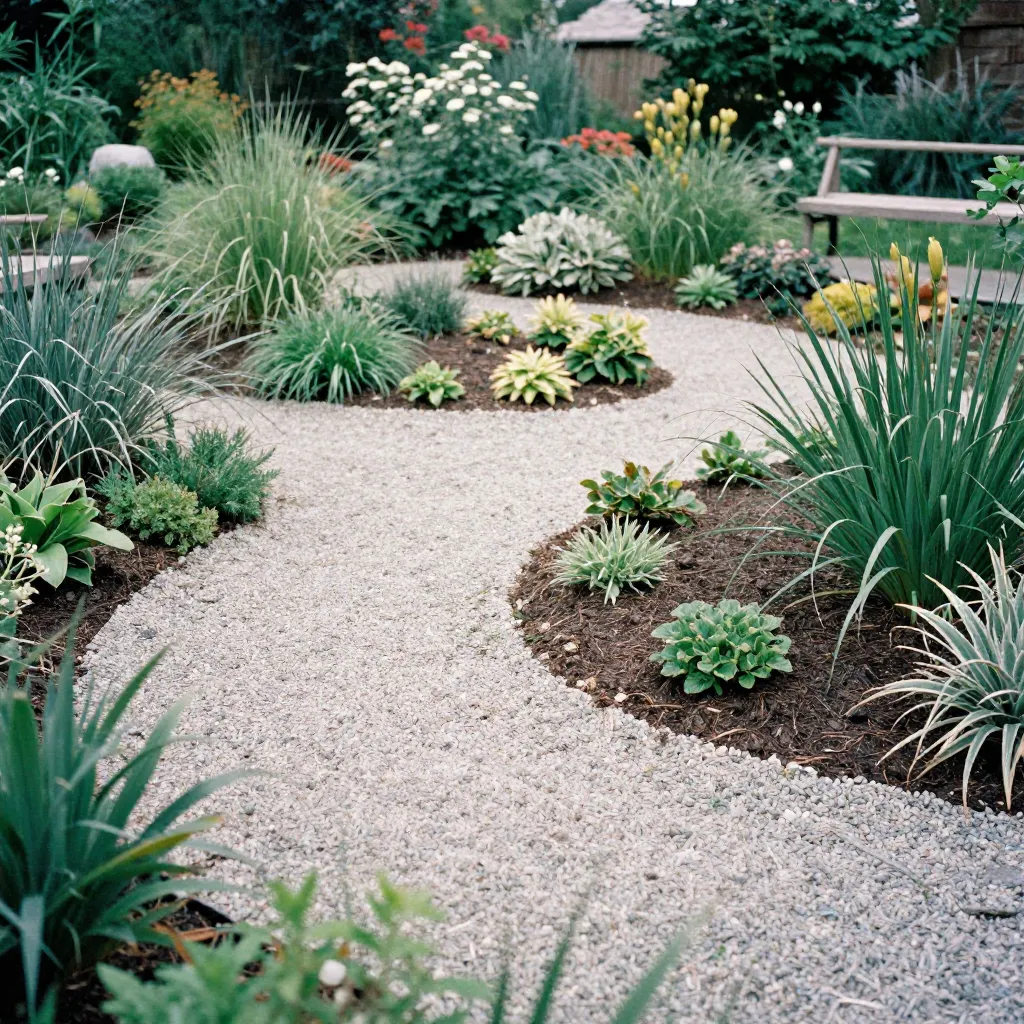
Based on assessment data, we create detailed plans that balance aesthetic goals with practical sustainability requirements. Materials and plants are selected to match your preferences.
Installation Support
Our process includes guidance for proper installation techniques. We provide documentation to ensure drainage layers and plant placement follow best practices.
Ongoing Consultation
After installation, we offer consultation on maintenance practices that support long-term success. This includes seasonal care guidelines and monitoring recommendations.