Evaluation Criteria
Our database categorizes plants based on documented performance in low-water conditions. Metrics include survival rates, water requirements, and thermal tolerance ranges.
Survival Score
A numerical rating from 1-100 indicating observed survival rates in drought conditions. Higher scores represent more reliable performance with minimal water input.
Thermal Tolerance
Temperature ranges where plants maintain healthy growth. This data helps match species to local climate conditions and microclimate variations.
Establishment Period
The time required for plants to develop sufficient root systems to become self-sustaining. This period may require supplemental watering until roots reach deeper layers.
Featured Species
Lavender
Lavandula angustifolia
Aromatic perennial with silver-green foliage. Thrives in well-drained conditions and full sun exposure. Minimal water requirements once established.
Sedum
Sedum spectabile
Succulent ground cover with excellent drought tolerance. Forms dense mats that suppress weeds and require virtually no irrigation after establishment.
Ornamental Grass
Festuca glauca
Clumping grass with blue-gray foliage. Provides texture and movement in the landscape while requiring minimal water and maintenance.
Rosemary
Rosmarinus officinalis
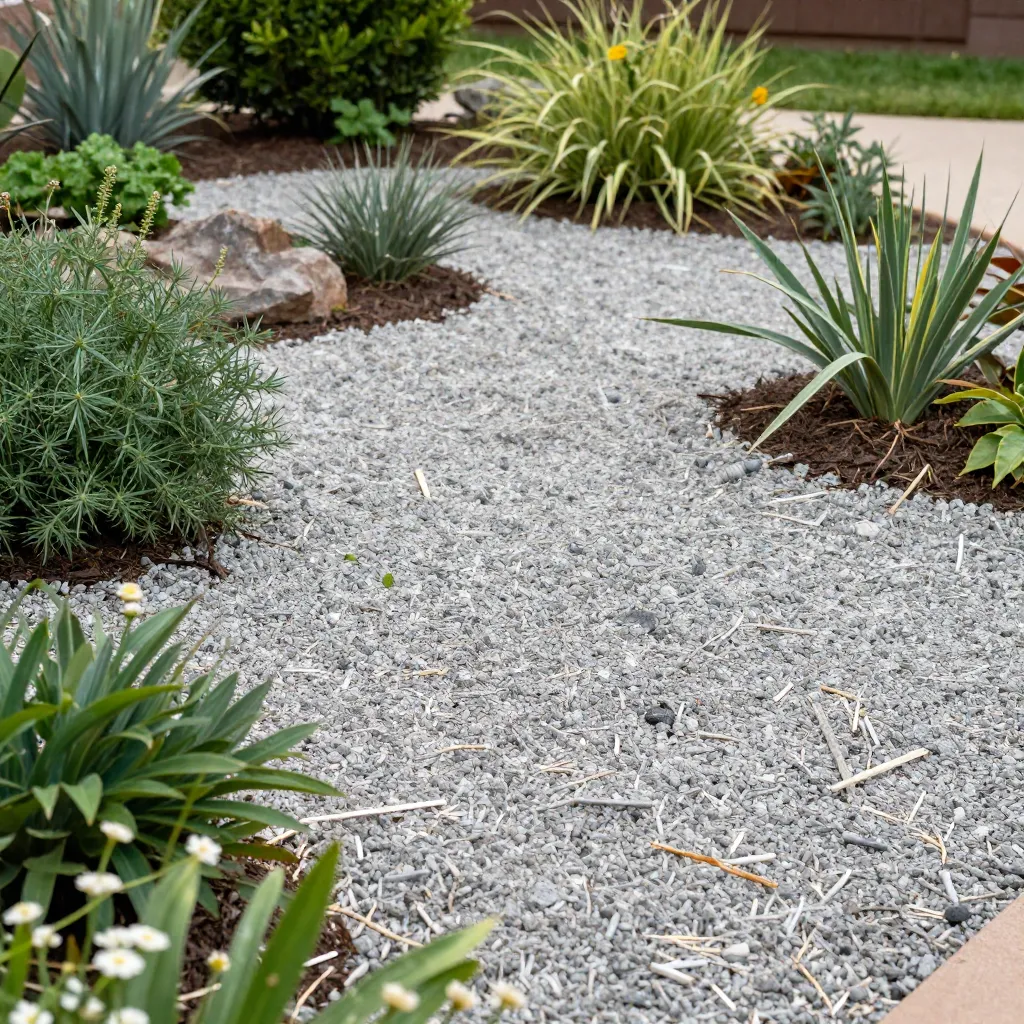
Evergreen shrub with aromatic leaves. Adapts well to gravel conditions and provides year-round structure. Tolerates dry, sunny locations.
Yarrow
Achillea millefolium
Hardy perennial with fern-like foliage and flat flower clusters. Spreads gradually and handles poor soil conditions with minimal water needs.
Thyme
Thymus serpyllum
Low-growing ground cover that forms dense mats. Excellent for filling spaces between stones and requires very little water once established.
Selection Guidelines
Climate Matching
Select species that match your local climate zone and typical weather patterns. Consider both average conditions and extreme events when making selections.
Plants native to similar climates often perform best, as they have evolved adaptations to local conditions. However, many non-native species can thrive when matched to appropriate microclimates.
Site-Specific Factors
Evaluate sun exposure, wind patterns, and soil characteristics before selecting plants. These factors significantly influence water requirements and plant performance.
Consider creating microclimates within your design. Strategic placement of larger plants can provide shade and wind protection for more sensitive species.